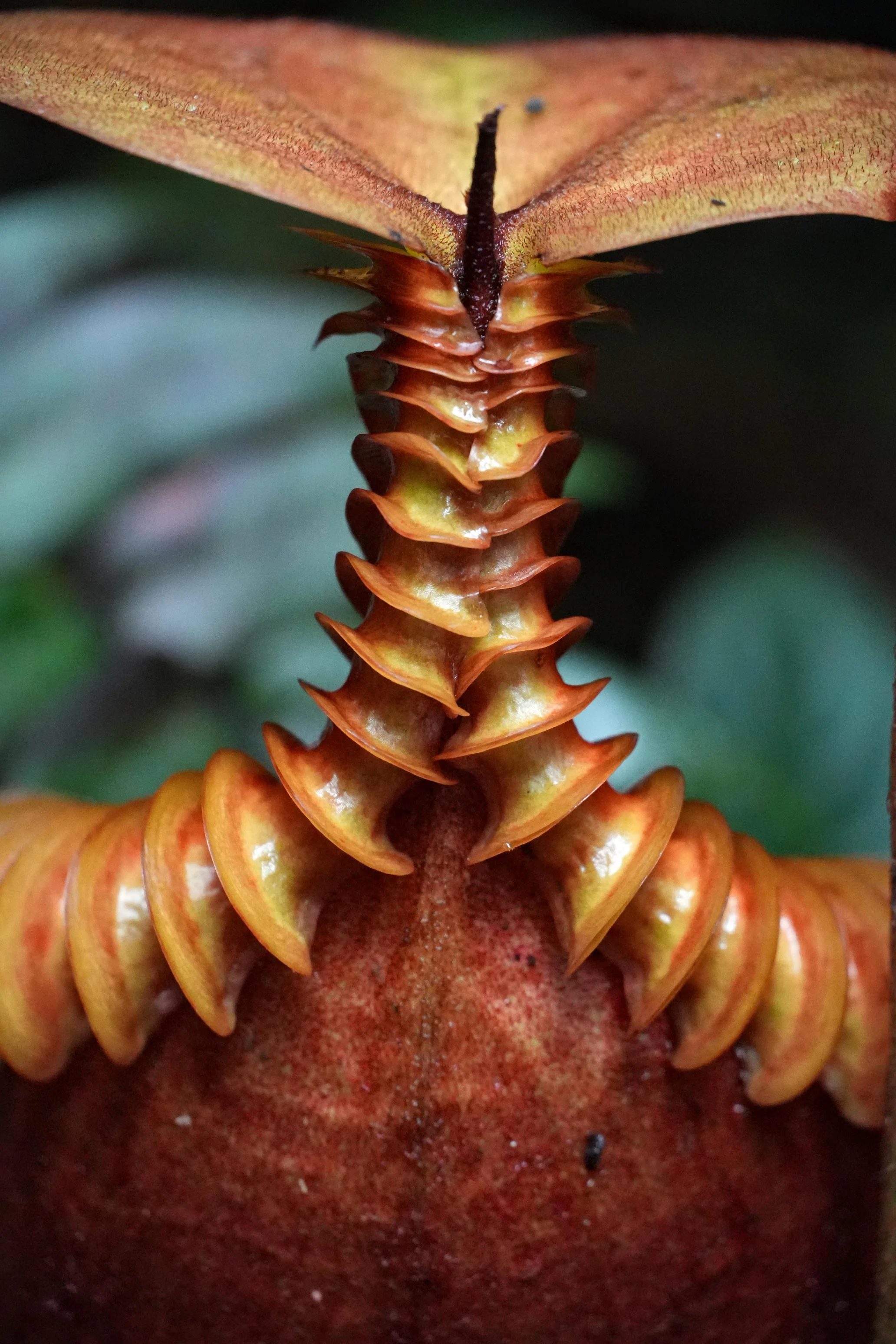
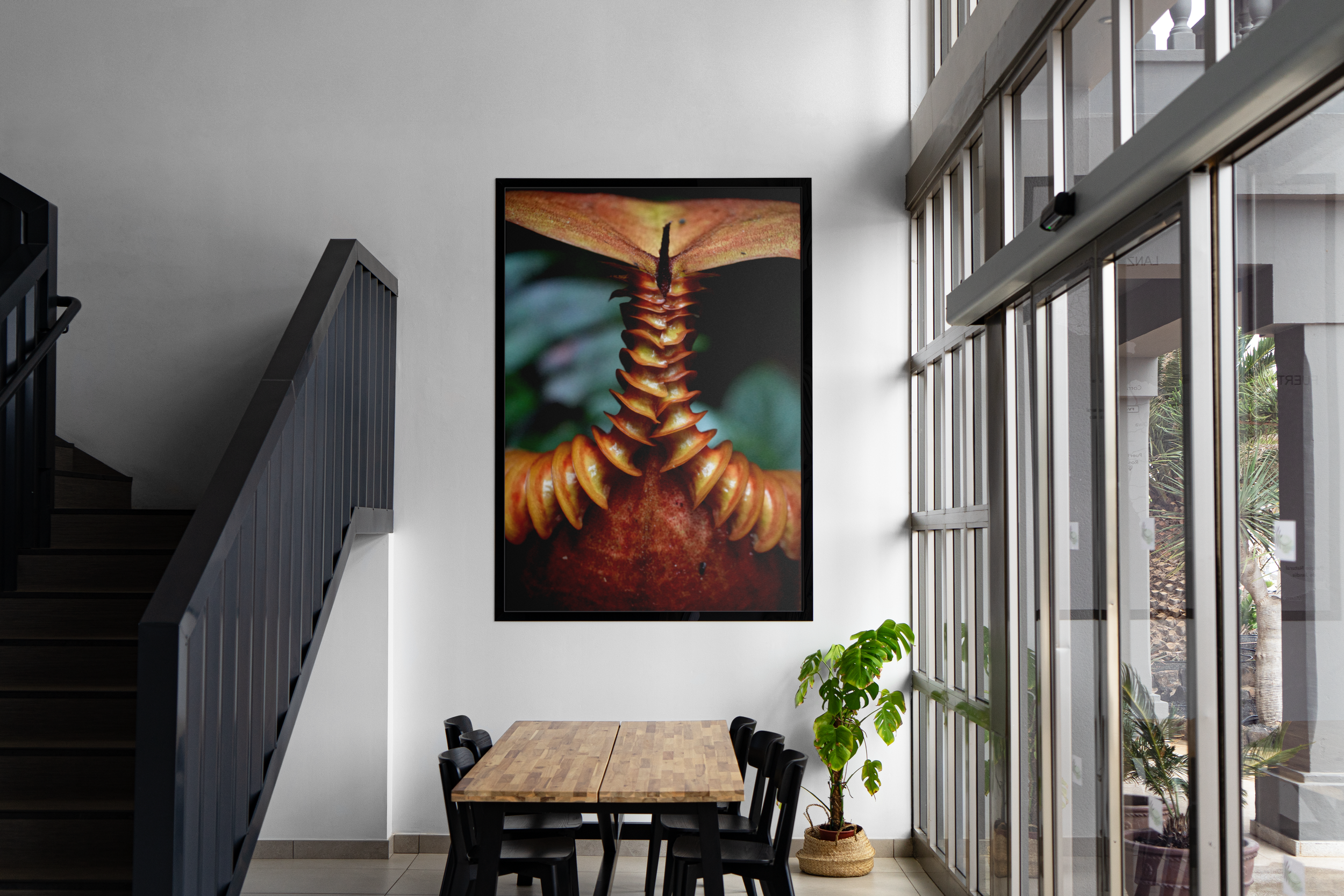
Nepenthes villosa - Rear Peristome
Print Information
Photographs are printed on archival quality paper using professional inkjet printers. Prints have a UV resistant coating to ensure longevity. I print my photographs locally here in Denver, Colorado, and personally inspect each print before shipping.
Photo Information
Sony a6700 | 26MP | 4128 x 6192 px | 135mm | ƒ/5.6 | 1/60 sec | ISO 6400
Mount Tambuyukon, Kinabalu National Park, Sabah, Malaysia | ~2250 meters ASL
Saturday, August 1, 2026, ~11:30 AM MYT
Species Information
Described in 1852 by Joseph Dalton Hooker, this jaw-dropping species is considered one of the most sought after and beautiful species of Nepenthes. Covered in fine hairs that allow it to collect condensation from the clouds, this slow-growing plant is found growing on Mount Kinabalu and Mount Tambuyukon. The peristome is uniquely fierce with dense, large ribbing only found on 3 other related species.
Photograph Information
Mt. Tambuyukon is the third highest peak in Malaysian Borneo at 2,580 meters (8,465 feet) above sea level. A challenging mountain to climb, requiring 3 days to ascend and descend. Daily rain is expected - so bring a raincoat! A handful of Nepenthes species grow on this mountain, including Nepenthes tentaculata, Nepenthes edwardsiana, Nepenthes villosa, Nepenthes rajah, Nepenthes burbidgeae, and natural hybrids such as Nepenthes x harryana and Nepenthes x kinabaluensis.
The lowlands are incredibly warm at over 30°C (86°F) and near 100% humidity, and absolutely crawling with bloodthirsty leeches. The leeches are so plentiful that at night you can occasionally hear them falling from the canopy above and onto your tent! Truly horrid!
While the lowlands are mostly flat, the ascent towards the highlands and peak is brutally steep and muddy, requiring a slow pace and a good hiking stick! The final ascent consists of climbing over large boulders and sharp, eroded ridge edges. A few spots have old, tattered ropes you grab to carefully climb the rocky sections.
Nepenthes villosa is located near the summit due to the species’ nighttime temperature requirements. I found this species mostly growing between ~1,800 meters (~5,900 feet) and ~2,300 (~7,500 feet) meters above sea level on this particular mountain. It grows mostly within the cloud forest, vining in the lower canopy and dropping its pitchers deep in the moss on the ground.
Having sprained my wrist on the previous mountain, I was sadly unable to reach the summit in time before the turnaround time of 1:00 PM. Thankfully, the peak doesn’t contain a huge concentration of Nepenthes and is often covered in dense clouds, so I didn’t miss too much!
Print Information
Photographs are printed on archival quality paper using professional inkjet printers. Prints have a UV resistant coating to ensure longevity. I print my photographs locally here in Denver, Colorado, and personally inspect each print before shipping.
Photo Information
Sony a6700 | 26MP | 4128 x 6192 px | 135mm | ƒ/5.6 | 1/60 sec | ISO 6400
Mount Tambuyukon, Kinabalu National Park, Sabah, Malaysia | ~2250 meters ASL
Saturday, August 1, 2026, ~11:30 AM MYT
Species Information
Described in 1852 by Joseph Dalton Hooker, this jaw-dropping species is considered one of the most sought after and beautiful species of Nepenthes. Covered in fine hairs that allow it to collect condensation from the clouds, this slow-growing plant is found growing on Mount Kinabalu and Mount Tambuyukon. The peristome is uniquely fierce with dense, large ribbing only found on 3 other related species.
Photograph Information
Mt. Tambuyukon is the third highest peak in Malaysian Borneo at 2,580 meters (8,465 feet) above sea level. A challenging mountain to climb, requiring 3 days to ascend and descend. Daily rain is expected - so bring a raincoat! A handful of Nepenthes species grow on this mountain, including Nepenthes tentaculata, Nepenthes edwardsiana, Nepenthes villosa, Nepenthes rajah, Nepenthes burbidgeae, and natural hybrids such as Nepenthes x harryana and Nepenthes x kinabaluensis.
The lowlands are incredibly warm at over 30°C (86°F) and near 100% humidity, and absolutely crawling with bloodthirsty leeches. The leeches are so plentiful that at night you can occasionally hear them falling from the canopy above and onto your tent! Truly horrid!
While the lowlands are mostly flat, the ascent towards the highlands and peak is brutally steep and muddy, requiring a slow pace and a good hiking stick! The final ascent consists of climbing over large boulders and sharp, eroded ridge edges. A few spots have old, tattered ropes you grab to carefully climb the rocky sections.
Nepenthes villosa is located near the summit due to the species’ nighttime temperature requirements. I found this species mostly growing between ~1,800 meters (~5,900 feet) and ~2,300 (~7,500 feet) meters above sea level on this particular mountain. It grows mostly within the cloud forest, vining in the lower canopy and dropping its pitchers deep in the moss on the ground.
Having sprained my wrist on the previous mountain, I was sadly unable to reach the summit in time before the turnaround time of 1:00 PM. Thankfully, the peak doesn’t contain a huge concentration of Nepenthes and is often covered in dense clouds, so I didn’t miss too much!