Photograph Prints

Print Information
Photographs are printed on archival quality paper using professional inkjet printers. Prints have a UV resistant coating to ensure longevity. I print my photographs locally here in Denver, Colorado, and personally inspect each print before shipping.
Photo Information
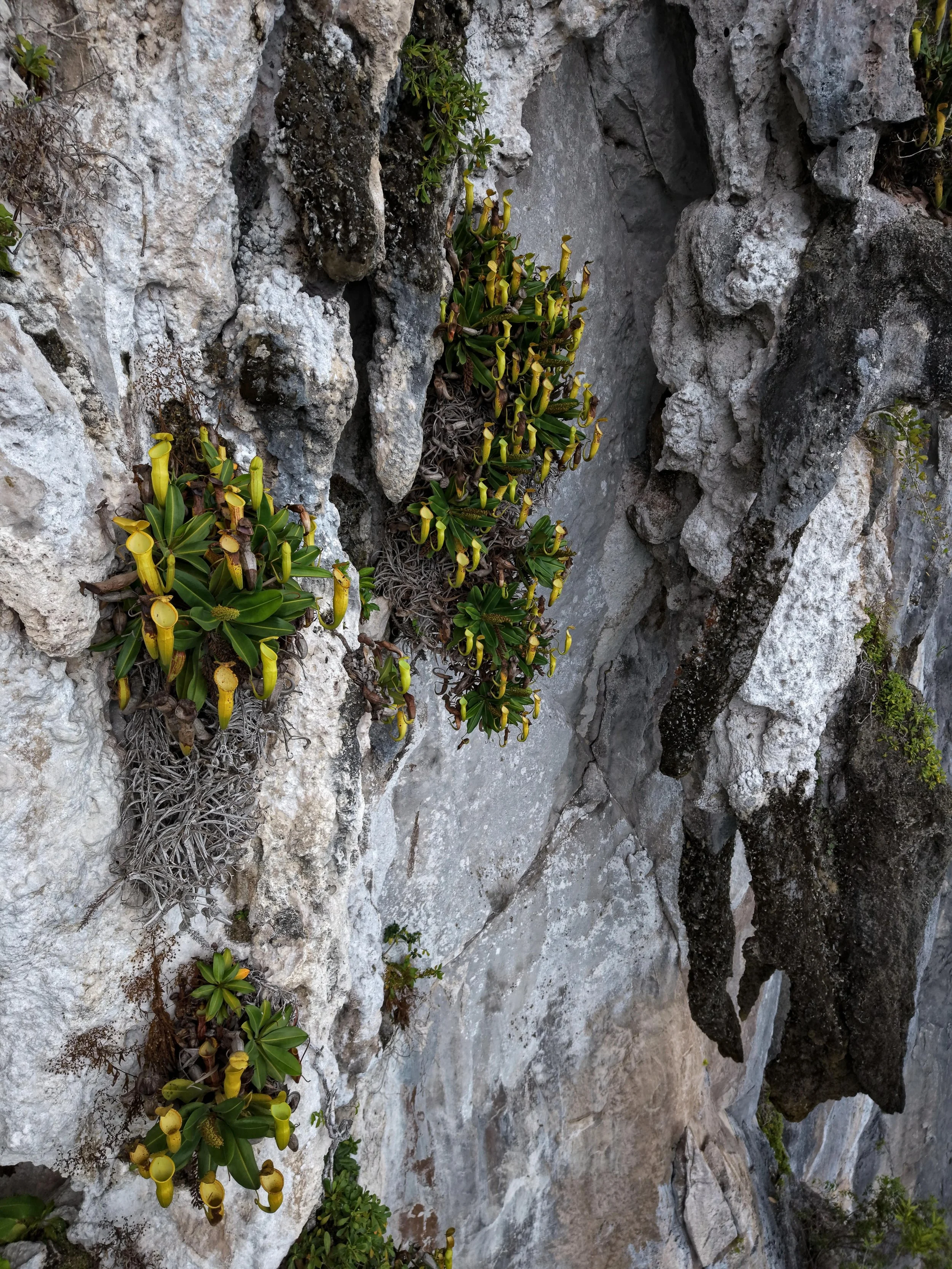
DJI Mini 5 Pro | 50MP | 6144 x 8192 px | 8.67mm | ƒ/1.8 | 1/15 sec | ISO 140
Puerto Princesa Subterranean River National Park, Palawan, Philippines | 522 meters ASL
Sunday, August 9, 2026, ~10:30 AM PHT
Information
Species
Newly described on November 11, 2025 - Nepenthes megastoma is a fascinating and unique species addition to the Nepenthes genus. Originally discovered in 2013, it was thought to be an existing visually similar species, Nepenthes campanulata. Beginning in 2023, a team of taxonomists and botanists began studying the plants further. After 2 years of research, it was concluded to be a new species.
Nepenthes megastoma is critically endangered, as fewer than 50 mature specimens are found across only three known locations. This species is only found growing along vertical limestone walls in the Mount Saint Paul karst formation. Unlike most members of the genus, Nepenthes megastoma has a highly compact, branching growth habit, and has adapted to relatively dryer conditions.
The name ‘megastoma’ originates from Greek, meaning “large mouth” - ‘mega’ meaning ‘large’ and ‘stoma’ meaning ‘mouth.’ Pitcher shapes change throughout the seasons, a suspected evolutionary trait to more efficiently collect water. During the dry season, pitchers form with a wide mouth and bell-shaped body, while during the monsoon season pitchers form with a slimmer, more elongated shape. Ants are likely this plant's main prey, as numerous ants can be found crawling on the undersides of the pitcher lids.
Photograph Information
After an early morning start followed by a 4-hour drive from Puerto Princesa, I was able to photograph this exceptionally rare and little-photographed species. Flying over 2 kilometers (~1.3 miles) away and over 450 meters above ground level, I maneuvered the drone around a small mountain formation to locate the cliffside where there was a known population. Over the course of about 4 hours, I flew my drone back and forth using multiple batteries and charging the spent ones as I went. A quick nap or two may have happened while the batteries were charging!
The cliffside is severely uneven and steep - leading to incredibly strong and irregular gusts of wind that made photographing this species very difficult. In order to get close enough, I had to disable the drone’s built-in LiDAR obstacle avoidance system and fly manually. One strong gust of wind and the drone would have been toast! Thankfully, after logging over three and a half hours of flight time and over 100 gigabytes of raw footage and photos, I made my way back to Puerto Princesa for my flight back home!
Print Information
Photographs are printed on archival quality paper using professional inkjet printers. Prints have a UV resistant coating to ensure longevity. I print my photographs locally here in Denver, Colorado, and personally inspect each print before shipping.
Photo Information
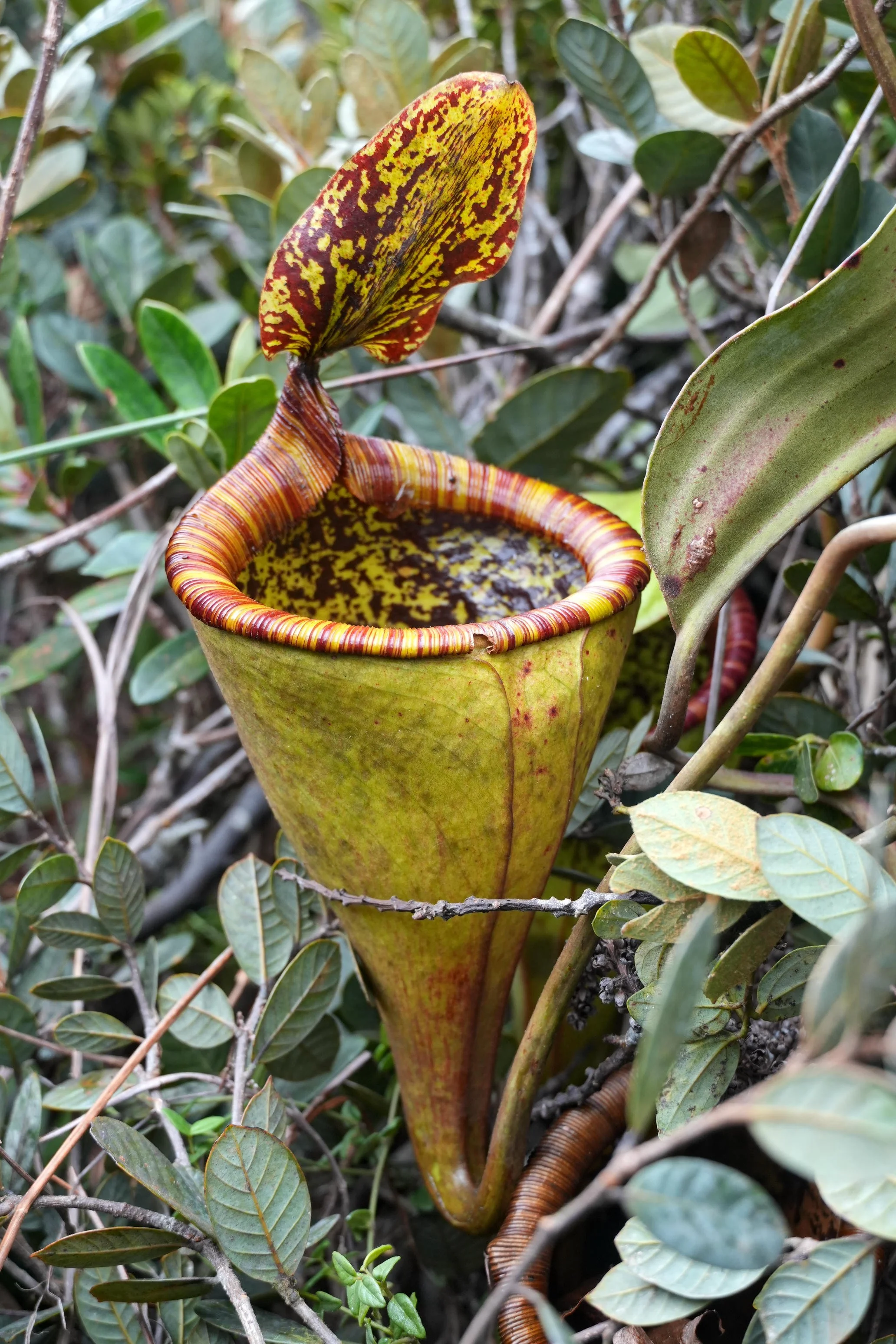
Sony a6700 | 26MP | 6192 x 4128 px | 43mm | ƒ/5 | 1/160 sec | ISO 640
Mount Victoria, Narra, Palawan, Philippines | ~1650 meters ASL
Saturday, August 8, 2026, ~11:00 AM PHT
Species Information
Nepenthes attenboroughii was discovered by Stewart McPherson, Alastair Robinson, Volker Heinrich in June of 2007. In 2000, a group of missionaries were climbing the mountain to install a radio tower, and reported seeing large cup shaped flowers at the summit, sparking interest in a potentially undiscovered Nepenthes species. Upon its discovery, it was immediately clear that it was not only a new species, but one of the largest Nepenthes species to ever be discovered.
Photograph Information
At a measured height of 1726 meters (5663 feet), Mt. Victoria is not the tallest mountain in the region, but is a difficult climb nonetheless. Requiring around 15 river crossings and a brutal summit ridge ascent, this species is only found at the top hundred meters of the Victoria massif. Only two Nepenthes species are found on this mountain peak, Nepenthes philippinensis, a common, lowland species that grows on the lower slopes, and Nepenthes attenboroughii, one of the largest Nepenthes species.
I took this photo of a particularly handsome Nepenthes attenboroughii pitcher near the summit, after rummaging around the shrubbery for about an hour. The plants blend in with the surrounding foliage, so it takes some effort to see any. Many of the plants are large and only have one or two active pitchers on them at a time, and they are usually buried deep within the shrubs. This particular pitcher was the nicest one I was able to find, and is a textbook definition of the species; with large, green, bell shaped pitchers and an upturned lid with a beautiful black speckling.
Surprisingly, there was cell service at the summit of the mountain, and we all received a hurricane warning, so I only had about 2 hours of exploring before having to quickly return back to a lower altitude. Thankfully the storm missed the entire island!
Print Information
Photographs are printed on archival quality paper using professional inkjet printers. Prints have a UV resistant coating to ensure longevity. I print my photographs locally here in Denver, Colorado, and personally inspect each print before shipping.
Photo Information
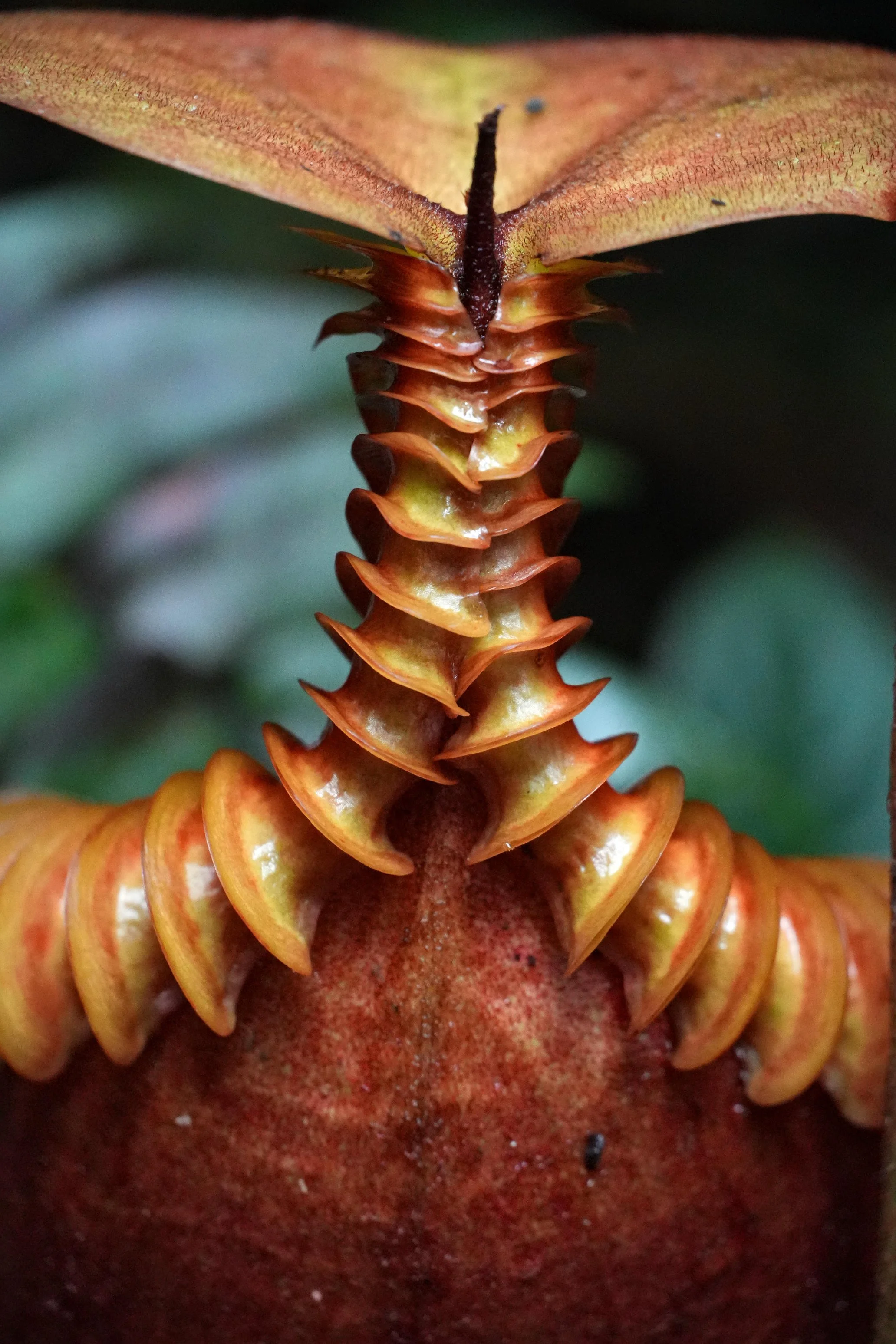
Sony a6700 | 26MP | 4128 x 6192 px | 135mm | ƒ/5.6 | 1/60 sec | ISO 6400
Mount Tambuyukon, Kinabalu National Park, Sabah, Malaysia | ~2250 meters ASL
Saturday, August 1, 2026, ~11:30 AM MYT
Species Information
Described in 1852 by Joseph Dalton Hooker, this jaw-dropping species is considered one of the most sought after and beautiful species of Nepenthes. Covered in fine hairs that allow it to collect condensation from the clouds, this slow-growing plant is found growing on Mount Kinabalu and Mount Tambuyukon. The peristome is uniquely fierce with dense, large ribbing only found on 3 other related species.
Photograph Information
Mt. Tambuyukon is the third highest peak in Malaysian Borneo at 2,580 meters (8,465 feet) above sea level. A challenging mountain to climb, requiring 3 days to ascend and descend. Daily rain is expected - so bring a raincoat! A handful of Nepenthes species grow on this mountain, including Nepenthes tentaculata, Nepenthes edwardsiana, Nepenthes villosa, Nepenthes rajah, Nepenthes burbidgeae, and natural hybrids such as Nepenthes x harryana and Nepenthes x kinabaluensis.
The lowlands are incredibly warm at over 30°C (86°F) and near 100% humidity, and absolutely crawling with bloodthirsty leeches. The leeches are so plentiful that at night you can occasionally hear them falling from the canopy above and onto your tent! Truly horrid!
While the lowlands are mostly flat, the ascent towards the highlands and peak is brutally steep and muddy, requiring a slow pace and a good hiking stick! The final ascent consists of climbing over large boulders and sharp, eroded ridge edges. A few spots have old, tattered ropes you grab to carefully climb the rocky sections.
Nepenthes villosa is located near the summit due to the species’ nighttime temperature requirements. I found this species mostly growing between ~1,800 meters (~5,900 feet) and ~2,300 (~7,500 feet) meters above sea level on this particular mountain. It grows mostly within the cloud forest, vining in the lower canopy and dropping its pitchers deep in the moss on the ground.
Having sprained my wrist on the previous mountain, I was sadly unable to reach the summit in time before the turnaround time of 1:00 PM. Thankfully, the peak doesn’t contain a huge concentration of Nepenthes and is often covered in dense clouds, so I didn’t miss too much!
Print Information
Photographs are printed on archival quality paper using professional inkjet printers. Prints have a UV resistant coating to ensure longevity. I print my photographs locally here in Denver, Colorado, and personally inspect each print before shipping.
Photo Information
Sony a6700 | 26MP | 4128 x 6192 px | 71mm | ƒ/5.6 | 1/125 sec | ISO 6400
Mount Tambuyukon, Kinabalu National Park, Sabah, Malaysia | ~1,800 meters ASL
Saturday, August 1, 2026, ~10:00 AM MYT
Species Information
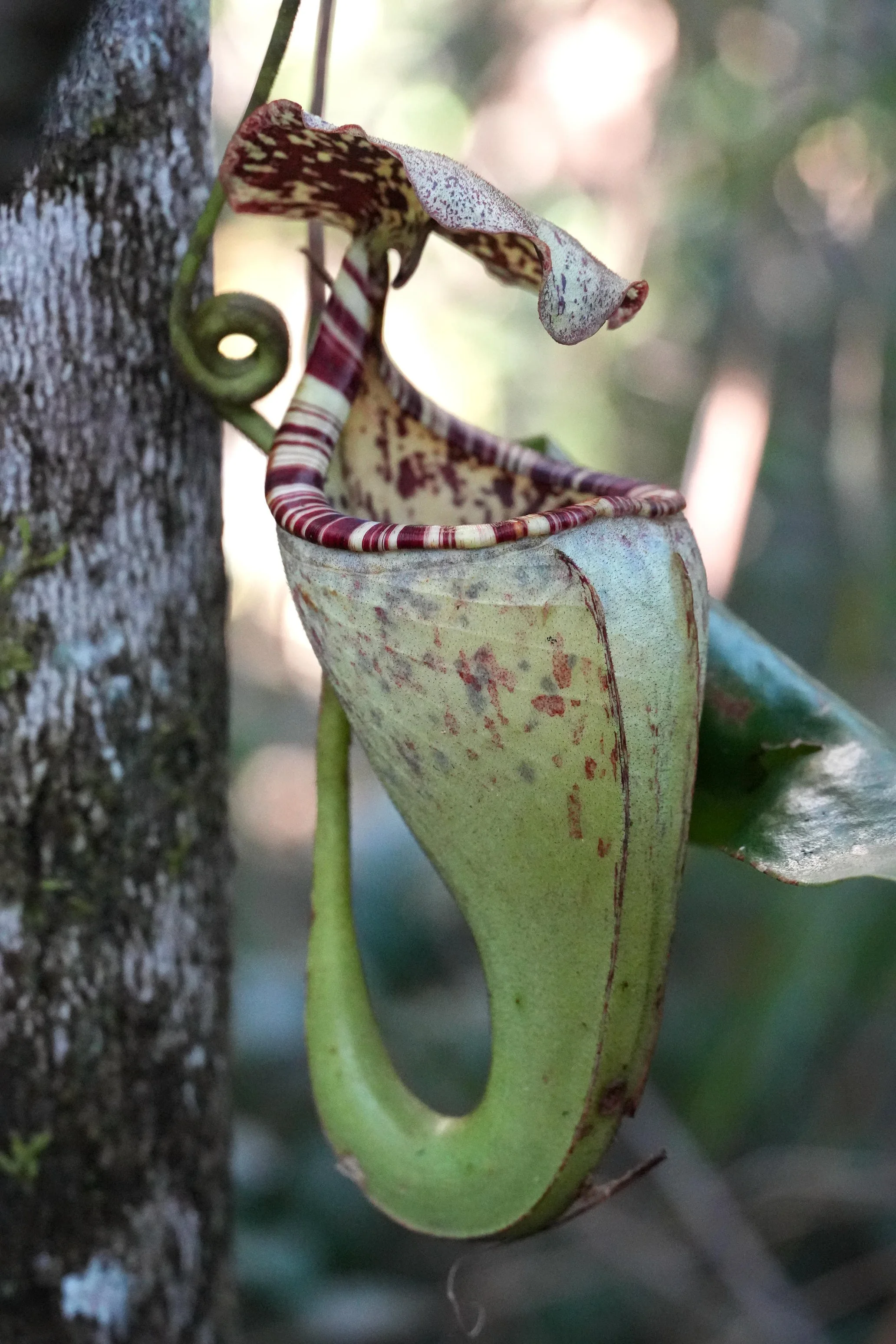
Described in 1858 by Hugh Low and Spenser St. John, Nepenthes burbideae is a unique species with its cream white pitcher and red, black, or purple speckling. This species is native to the peaks and higher elevation areas of Kinabalu National Park. Unlike other Nepenthes species, Nepenthes burbidgeae is quite difficult to find due to its very sparse population, with individuals being isolated.
Photograph Information
Mt. Tambuyukon is the third highest peak in Malaysian Borneo at 2,580 meters (8,465 feet) above sea level. A challenging mountain to climb, requiring 3 days to ascend and descend. Daily rain is expected - so bring a raincoat! A handful of Nepenthes species grow on this mountain, including Nepenthes tentaculata, Nepenthes edwardsiana, Nepenthes villosa, Nepenthes rajah, Nepenthes burbidgeae, and natural hybrids such as Nepenthes x harryana and Nepenthes x kinabaluensis.
The lowlands are incredibly warm at over 30°C (86°F) and near 100% humidity, and absolutely crawling with bloodthirsty leeches. The leeches are so plentiful that at night you can occasionally hear them falling from the canopy above and onto your tent! Truly horrid!
While the lowlands are mostly flat, the ascent towards the highlands and peak is brutally steep and muddy, requiring a slow pace and a good hiking stick! The final ascent consists of climbing over large boulders and sharp, eroded ridge edges. A few spots have old, tattered ropes you grab to carefully climb the rocky sections.
Nepenthes burbidgeae is found between ~1,500 meters (5905 feet) and 2,000 meters (6560 feet) on Mt. Tambuyukon. This was the only plant we found growing along the trail, but other individuals were found a ways off the trail. It seems to grow mostly as a vining plant, with rosettes not being easily found.
Having sprained my wrist on the previous mountain, I was sadly unable to reach the summit in time before the turnaround time of 1:00 PM. Thankfully, the peak doesn’t contain a huge concentration of Nepenthes and is often covered in dense clouds, so I didn’t miss too much!
Print Information
Photographs are printed on archival quality paper using professional inkjet printers. Prints have a UV resistant coating to ensure longevity. I print my photographs locally here in Denver, Colorado, and personally inspect each print before shipping.
Photo Information
Sony a6700 | 26MP | 4128 x 6192 px | 44mm | ƒ/5 | 1/100 sec | ISO 6400
Mount Tambuyukon, Kinabalu National Park, Sabah, Malaysia | ~2250 meters ASL
Wednesday, July 22, 2026, ~12:00 MYT
Species Information
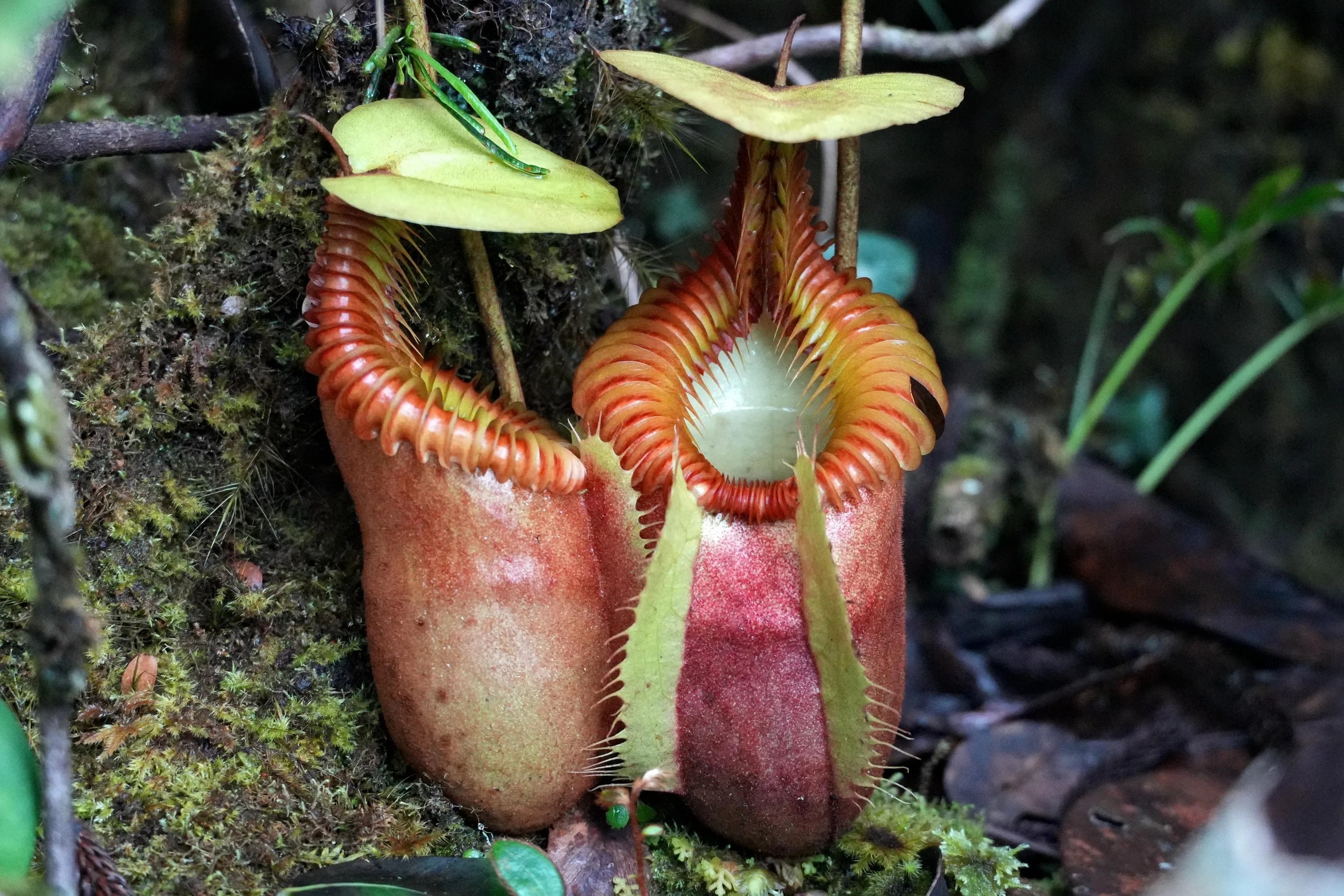
Described in 1852 by Joseph Dalton Hooker, this jaw-dropping species is considered one of the most sought after and beautiful species of Nepenthes. Covered in fine hairs that allow it to collect condensation from the clouds, this slow-growing plant is found growing on Mount Kinabalu and Mount Tambuyukon. The peristome is uniquely fierce with dense, large ribbing only found on 3 other related species.
Photograph Information
Mt. Tambuyukon is the third highest peak in Malaysian Borneo at 2,580 meters (8,465 feet) above sea level. A challenging mountain to climb, requiring 3 days to ascend and descend. Daily rain is expected - so bring a raincoat! A handful of Nepenthes species grow on this mountain, including Nepenthes tentaculata, Nepenthes edwardsiana, Nepenthes villosa, Nepenthes rajah, Nepenthes burbidgeae, and natural hybrids such as Nepenthes x harryana and Nepenthes x kinabaluensis.
The lowlands are incredibly warm at over 30°C (86°F) and near 100% humidity, and absolutely crawling with bloodthirsty leeches. The leeches are so plentiful that at night you can occasionally hear them falling from the canopy above and onto your tent! Truly horrid!
While the lowlands are mostly flat, the ascent towards the highlands and peak is brutally steep and muddy, requiring a slow pace and a good hiking stick! The final ascent consists of climbing over large boulders and sharp, eroded ridge edges. A few spots have old, tattered ropes you grab to carefully climb the rocky sections.
Nepenthes villosa is located near the summit due to the species’ nighttime temperature requirements. I found this species mostly growing between ~1,800 meters (~5,900 feet) and ~2,300 (~7,500 feet) meters above sea level on this particular mountain. It grows mostly within the cloud forest, vining in the lower canopy and dropping its pitchers deep in the moss on the ground.
Having sprained my wrist on the previous mountain, I was sadly unable to reach the summit in time before the turnaround time of 1:00 PM. Thankfully, the peak doesn’t contain a huge concentration of Nepenthes and is often covered in dense clouds, so I didn’t miss too much!
Print Information
Photographs are printed on archival quality paper using professional inkjet printers. Prints have a UV resistant coating to ensure longevity. I print my photographs locally here in Denver, Colorado, and personally inspect each print before shipping.
Photo Information
Sony a6700 | 26MP | 6192 x 4128 px | 38mm | ƒ/4.5 | 1/160 sec | ISO 640
Mount Victoria, Narra, Palawan, Philippines | ~1650 meters ASL
Saturday, August 8, 2026, ~11:00 AM PHT
Species Information
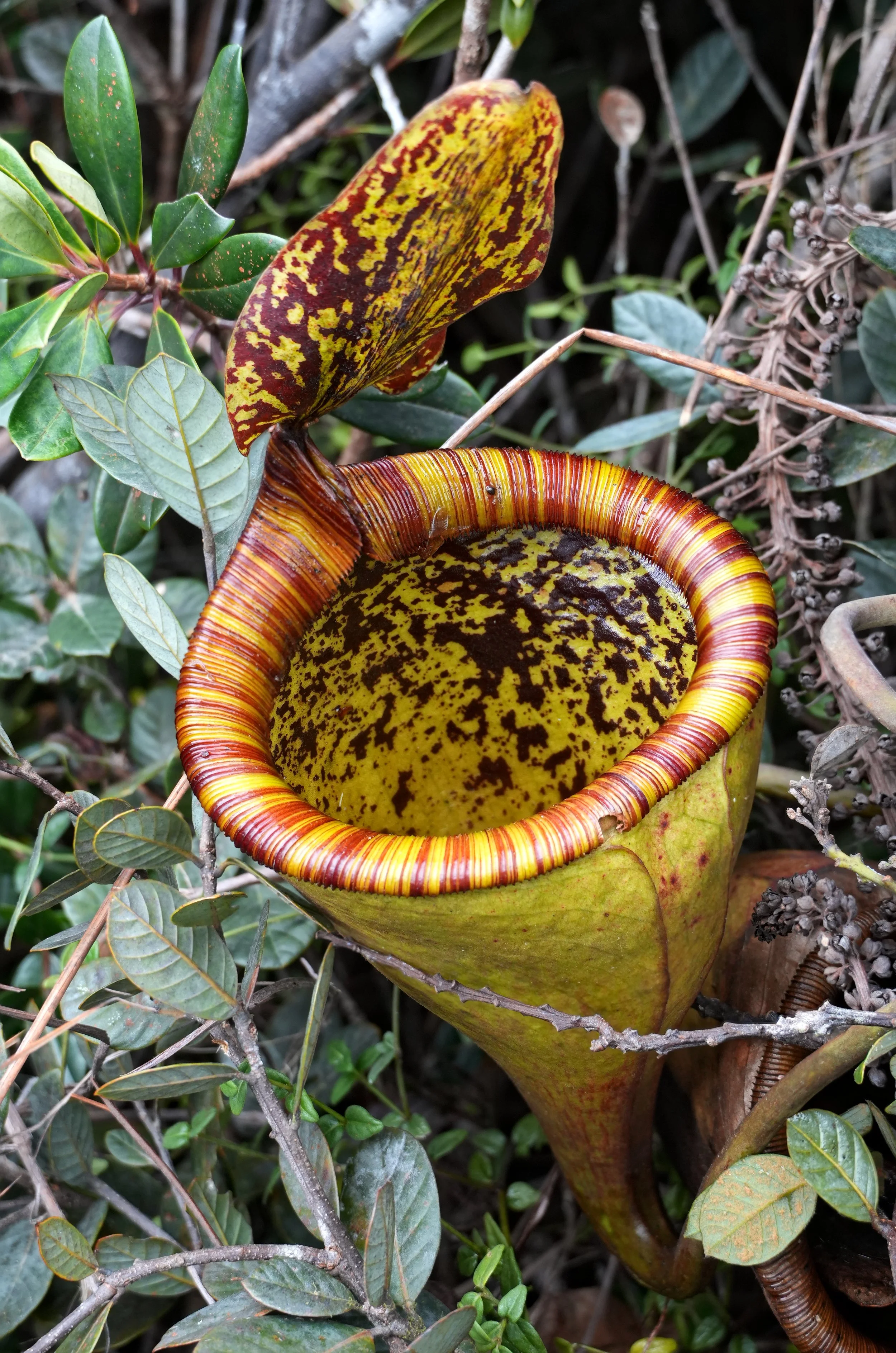
Nepenthes attenboroughii was discovered by Stewart McPherson, Alastair Robinson, Volker Heinrich in June of 2007. In 2000, a group of missionaries were climbing the mountain to install a radio tower, and reported seeing large cup shaped flowers at the summit, sparking interest in a potentially undiscovered Nepenthes species. Upon its discovery, it was immediately clear that it was not only a new species, but one of the largest Nepenthes species to ever be discovered.
Photograph Information
At a measured height of 1726 meters (5663 feet), Mt. Victoria is not the tallest mountain in the region, but is a difficult climb nonetheless. Requiring around 15 river crossings and a brutal summit ridge ascent, this species is only found at the top hundred meters of the Victoria massif. Only two Nepenthes species are found on this mountain peak, Nepenthes philippinensis, a common, lowland species that grows on the lower slopes, and Nepenthes attenboroughii, one of the largest Nepenthes species.
I took this photo of a particularly handsome Nepenthes attenboroughii pitcher near the summit, after rummaging around the shrubbery for about an hour. The plants blend in with the surrounding foliage, so it takes some effort to see any. Many of the plants are large and only have one or two active pitchers on them at a time, and they are usually buried deep within the shrubs. This particular pitcher was the nicest one I was able to find, and is a textbook definition of the species; with large, green, bell shaped pitchers and an upturned lid with a beautiful black speckling.
Surprisingly, there was cell service at the summit of the mountain, and we all received a hurricane warning, so I only had about 2 hours of exploring before having to quickly return back to a lower altitude. Thankfully the storm missed the entire island!
Print Information
Photographs are printed on archival quality paper using professional inkjet printers. Prints have a UV resistant coating to ensure longevity. I print my photographs locally here in Denver, Colorado, and personally inspect each print before shipping.
Photo Information
Sony a6700 | 26MP | 4128 x 6192 px | 37mm | ƒ/4.5 | 1/160 sec | ISO 640
Mount Murud, Limbang Division, Sarawak, Malaysia | ~2050 meters ASL
Wednesday, July 22, 2026, ~1:00 PM MYT
Species Information
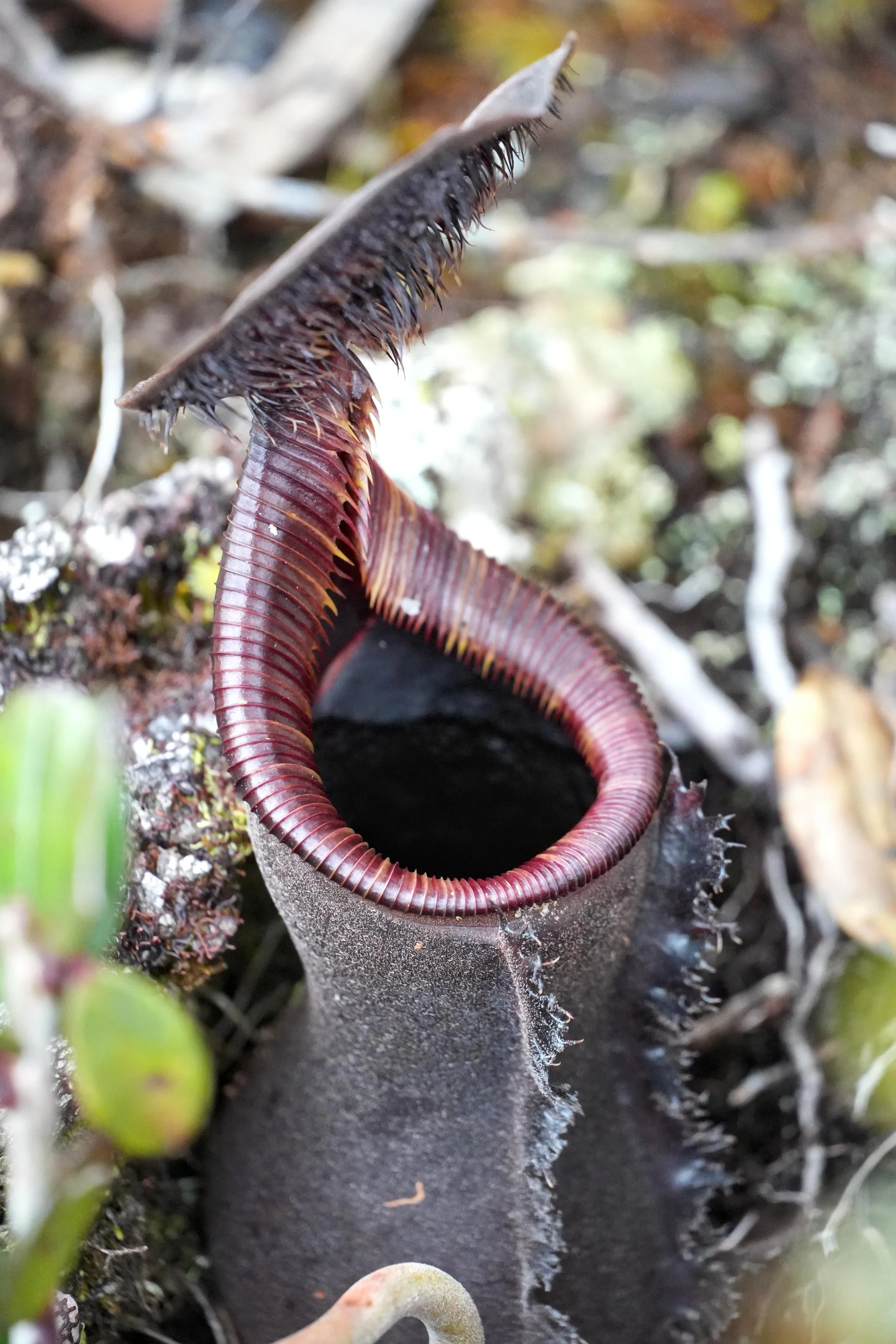
Described in 1851 by Hugh Low, Nepenthes lowii is an iconic highland Nepenthes species prized for its unique, woody toilet-shaped pitchers. Unlike a majority of Nepenthes species - Nepenthes lowii has transitioned away from traditional carnivory and is coprophagous, getting its nutrients not from insects but from the droppings of small tree shrews. The lid exudes a sweet substance called exudate that attracts tree shrews, which feed on it and deposit their droppings into the pitcher.. The wide mouth ensures all droppings are caught and washed into the chamber below with rain.
Photograph Information
Mt. Murud is the tallest peak in Sarawak, Borneo, at 2,423 meters (7,950 feet) above sea level. Several Nepenthes species call this mountain home, most notably Nepenthes tentaculata, Nepenthes veitchii, Nepenthes lowii, Nepenthes chaniana, Nepenthes mollis, and Nepenthes murudensis. This is a holy mountain, where smoking and alcohol are strictly prohibited. Every two years a large group of worshipers and porters from around the world gather and ascend the mountain to pray at Church Camp - a clearing in the pristine forest you reach after a day's hike.
Requiring a horrendously bumpy 13-hour drive in a 4x4 vehicle, this mountain is incredibly remote and difficult to reach. The climb is challenging, with steep, muddy terrain throughout and daily rain showers lasting hours. Church Camp is a surreal experience - after spending hours in ankle-deep mud, you enter a clearing and are greeted with dozens of wooden and metal huts, and a large church on a small hill. Thankfully - you spend the night here and can rest under a solid roof and a fire!
This photograph of Nepenthes lowii was taken at the rock garden, which took approximately 5 hours to reach from Church Camp. This exposed, rocky area has few trees and is perfect habitat for Nepenthes lowii - a slow-growing plant that grows best in full sun. Hundreds of massive, ancient specimens cover the slope of the mountain, with large flower spikes covering the eastern mountain slope for hundreds of meters in each direction.
After spending 3 days on this mountain, I made my way down where unfortunately, I slipped and sprained my wrist. While it made the rest of the climbs incredibly difficult, I was motivated by all the amazing Nepenthes species I had yet to see and photograph!
Print Information
Photographs are printed on archival quality paper using professional inkjet printers. Prints have a UV resistant coating to ensure longevity. I print my photographs locally here in Denver, Colorado, and personally inspect each print before shipping.
Photo Information
Sony a6700 | 26MP | 4128 x 6192 px | 37mm | ƒ/4.5 | 1/160 sec | ISO 640
Mount Murud, Limbang Division, Sarawak, Malaysia | ~2050 meters ASL
Wednesday, July 22, 2026, ~1:00 PM MYT
Species Information
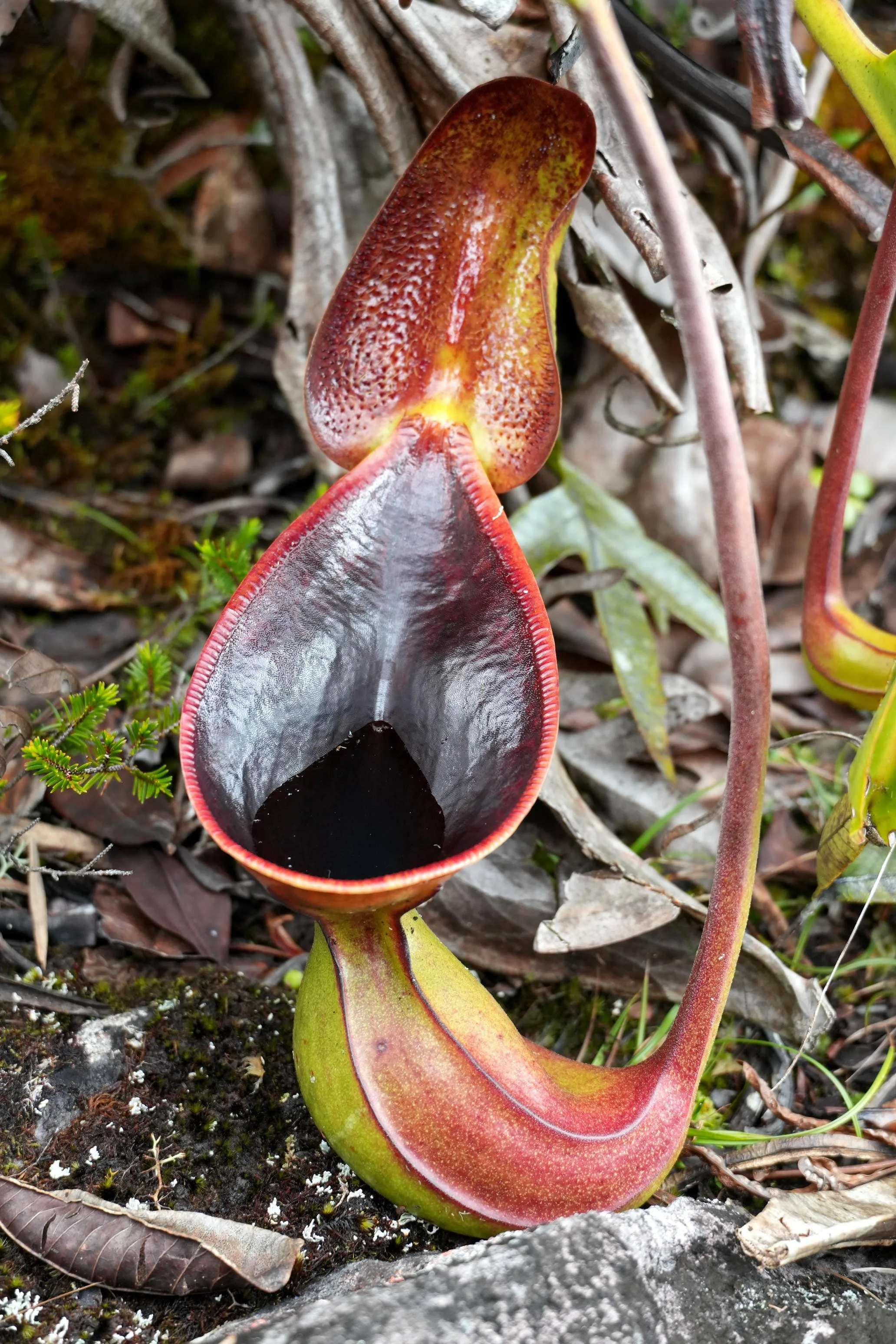
Described in 1851 by Hugh Low, Nepenthes lowii is an iconic highland Nepenthes species prized for its unique, woody toilet-shaped pitchers. Unlike a majority of Nepenthes species - Nepenthes lowii has transitioned away from traditional carnivory and is coprophagous, getting its nutrients not from insects but from the droppings of small tree shrews. The lid exudes a sweet substance called exudate that attracts tree shrews, which feed on it and deposit their droppings into the pitcher.. The wide mouth ensures all droppings are caught and washed into the chamber below with rain.
Photograph Information
Mt. Murud is the tallest peak in Sarawak, Borneo, at 2,423 meters (7,950 feet) above sea level. Several Nepenthes species call this mountain home, most notably Nepenthes tentaculata, Nepenthes veitchii, Nepenthes lowii, Nepenthes chaniana, Nepenthes mollis, and Nepenthes murudensis. This is a holy mountain, where smoking and alcohol are strictly prohibited. Every two years a large group of worshipers and porters from around the world gather and ascend the mountain to pray at Church Camp - a clearing in the pristine forest you reach after a day's hike.
Requiring a horrendously bumpy 13-hour drive in a 4x4 vehicle, this mountain is incredibly remote and difficult to reach. The climb is challenging, with steep, muddy terrain throughout and daily rain showers lasting hours. Church Camp is a surreal experience - after spending hours in ankle-deep mud, you enter a clearing and are greeted with dozens of wooden and metal huts, and a large church on a small hill. Thankfully - you spend the night here and can rest under a solid roof and a fire!
This photograph of Nepenthes lowii was taken at the rock garden, which took approximately 5 hours to reach from Church Camp. This exposed, rocky area has few trees and is perfect habitat for Nepenthes lowii - a slow-growing plant that grows best in full sun. Hundreds of massive, ancient specimens cover the slope of the mountain, with large flower spikes covering the eastern mountain slope for hundreds of meters in each direction.
After spending 3 days on this mountain, I made my way down where unfortunately, I slipped and sprained my wrist. While it made the rest of the climbs incredibly difficult, I was motivated by all the amazing Nepenthes species I had yet to see and photograph!
Print Information
Photographs are printed on archival quality paper using professional inkjet printers. Prints have a UV resistant coating to ensure longevity. I print my photographs locally here in Denver, Colorado, and personally inspect each print before shipping.
Photo Information
Sony a6700 | 26MP | 4128 x 6192 px | 39mm | ƒ/4.5 | 1/160 sec | ISO 5000
Mount Tambuyukon, Kinabalu National Park, Sabah, Malaysia | ~2250 meters ASL
Wednesday, July 22, 2026, ~12:00 MYT
Species Information
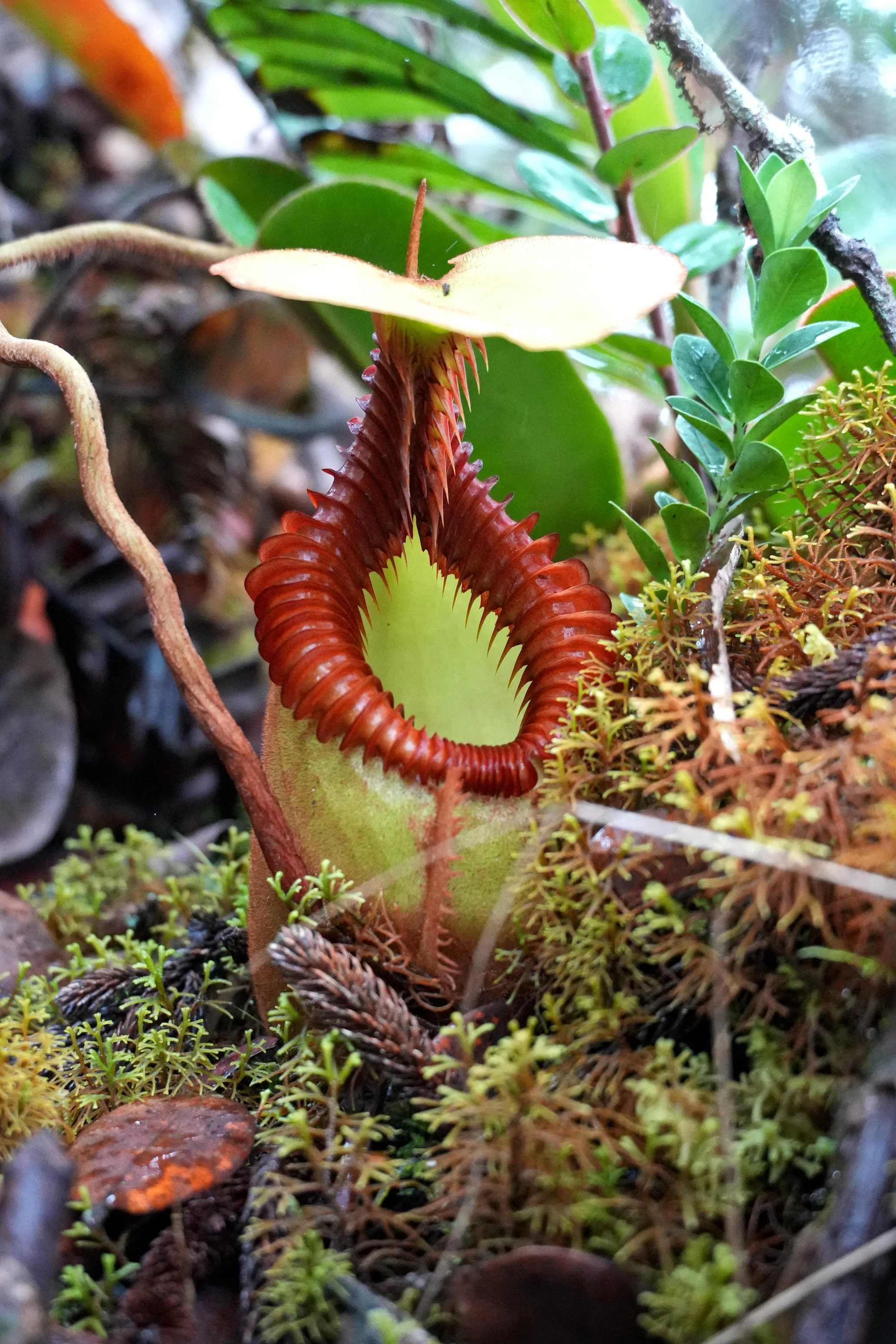
Described in 1852 by Joseph Dalton Hooker, this jaw-dropping species is considered one of the most sought after and beautiful species of Nepenthes. Covered in fine hairs that allow it to collect condensation from the clouds, this slow-growing plant is found growing on Mount Kinabalu and Mount Tambuyukon. The peristome is uniquely fierce with dense, large ribbing only found on 3 other related species.
Photograph Information
Mt. Tambuyukon is the third highest peak in Malaysian Borneo at 2,580 meters (8,465 feet) above sea level. A challenging mountain to climb, requiring 3 days to ascend and descend. Daily rain is expected - so bring a raincoat! A handful of Nepenthes species grow on this mountain, including Nepenthes tentaculata, Nepenthes edwardsiana, Nepenthes villosa, Nepenthes rajah, Nepenthes burbidgeae, and natural hybrids such as Nepenthes x harryana and Nepenthes x kinabaluensis.
The lowlands are incredibly warm at over 30°C (86°F) and near 100% humidity, and absolutely crawling with bloodthirsty leeches. The leeches are so plentiful that at night you can occasionally hear them falling from the canopy above and onto your tent! Truly horrid!
While the lowlands are mostly flat, the ascent towards the highlands and peak is brutally steep and muddy, requiring a slow pace and a good hiking stick! The final ascent consists of climbing over large boulders and sharp, eroded ridge edges. A few spots have old, tattered ropes you grab to carefully climb the rocky sections.
Nepenthes villosa is located near the summit due to the species’ nighttime temperature requirements. I found this species mostly growing between ~1,800 meters (~5,900 feet) and ~2,300 (~7,500 feet) meters above sea level on this particular mountain. It grows mostly within the cloud forest, vining in the lower canopy and dropping its pitchers deep in the moss on the ground.
Having sprained my wrist on the previous mountain, I was sadly unable to reach the summit in time before the turnaround time of 1:00 PM. Thankfully, the peak doesn’t contain a huge concentration of Nepenthes and is often covered in dense clouds, so I didn’t miss too much!
Print Information
Photographs are printed on archival quality paper using professional inkjet printers. Prints have a UV resistant coating to ensure longevity. I print my photographs locally here in Denver, Colorado, and personally inspect each print before shipping.
Photo Information
Sony a6000 | 24MP | 6000 x 4000 px | 33mm | ƒ/11 | 1/250 sec | ISO 100
Saguaro National Park, Arizona, United States of America
Summer 2019
Species Information
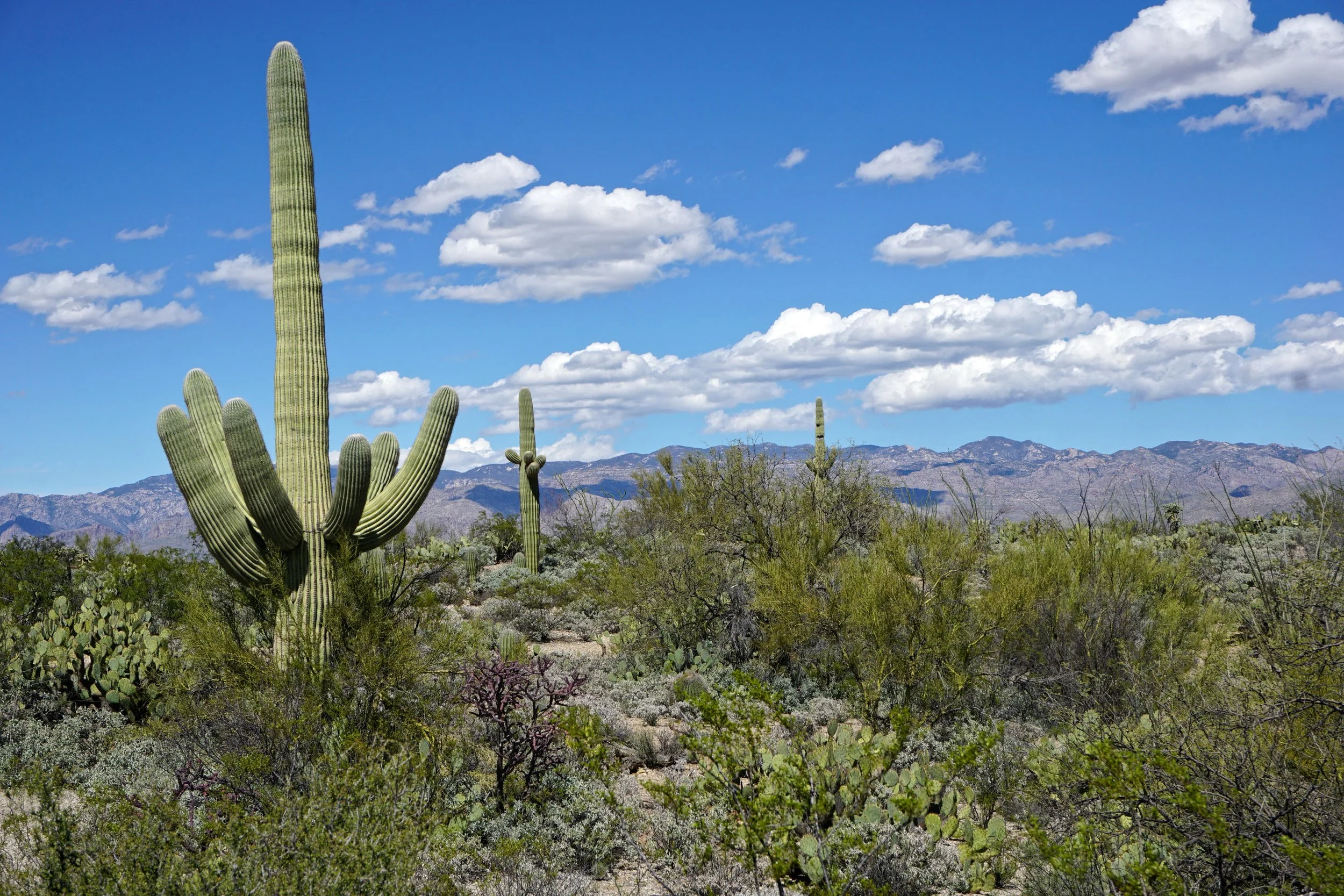
Towering over the American southwest desert for millennia, the saguaro cactus, Carnegiea gigantea, is a species to behold. Growing slowly over centuries, these massive cacti collect and store water in their succulent stems. The saguaro cactus is a keystone species, providing food and shelter for many animals and plants in its habitat. These massive plants can live for 150 - 200 years under optimal conditions, though climate change is negatively impacting wild populations.
Photograph Information
Framed against the blue Arizonian sky, this photograph captures these giant cacti against a stunning mountain backdrop. The saguaro cacti tower over everything in their vicinity, dwarfing the shrubbery around them. Taking a century or more to grow a single arm, these cacti are older than the national park itself!
Instead of taking a photo during golden hour, I wanted to highlight the contrast and harshness of the desert sun - and how these incredibly adapted plants fit right into what most would find inhospitable. Trekking was admittedly miserable due to the sheer heat and beating of the sun - but this photo was well worth the tan!
Print Information
Photographs are printed on archival quality paper using professional inkjet printers. Prints have a UV resistant coating to ensure longevity. I print my photographs locally here in Denver, Colorado, and personally inspect each print before shipping.
Photo Information
Sony a6700 | 26MP | 4128 x 6192 px | 37mm | ƒ/4.5 | 1/160 sec | ISO 640
Mount Murud, Limbang Division, Sarawak, Malaysia | ~2050 meters ASL
Wednesday, July 22, 2026, ~1:00 PM MYT
Species Information
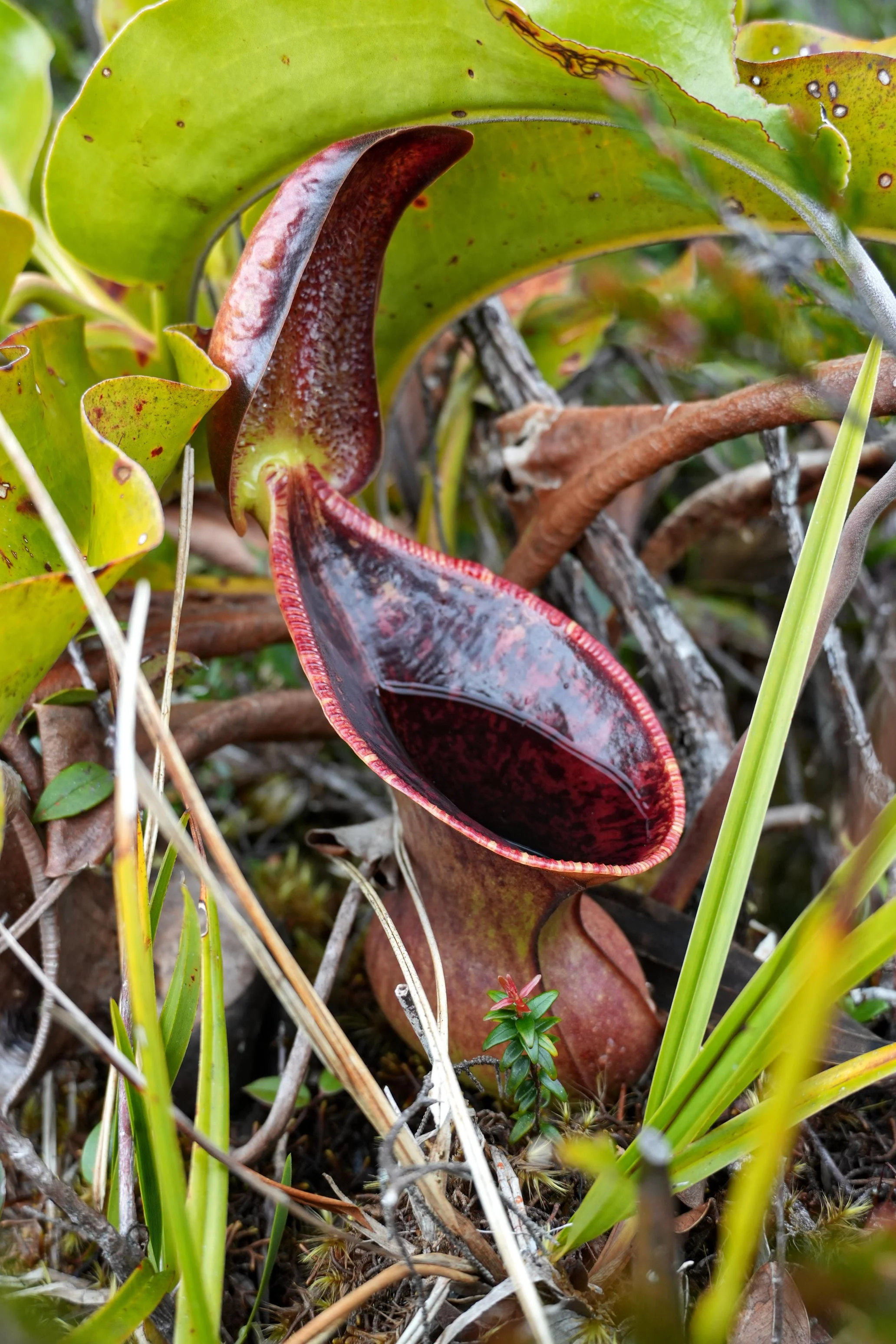
Described in 1851 by Hugh Low, Nepenthes lowii is an iconic highland Nepenthes species prized for its unique, woody toilet-shaped pitchers. Unlike a majority of Nepenthes species - Nepenthes lowii has transitioned away from traditional carnivory and is coprophagous, getting its nutrients not from insects but from the droppings of small tree shrews. The lid exudes a sweet substance called exudate that attracts tree shrews, which feed on it and deposit their droppings into the pitcher.. The wide mouth ensures all droppings are caught and washed into the chamber below with rain.
Photograph Information
Mt. Murud is the tallest peak in Sarawak, Borneo, at 2,423 meters (7,950 feet) above sea level. Several Nepenthes species call this mountain home, most notably Nepenthes tentaculata, Nepenthes veitchii, Nepenthes lowii, Nepenthes chaniana, Nepenthes mollis, and Nepenthes murudensis. This is a holy mountain, where smoking and alcohol are strictly prohibited. Every two years a large group of worshipers and porters from around the world gather and ascend the mountain to pray at Church Camp - a clearing in the pristine forest you reach after a day's hike.
Requiring a horrendously bumpy 13-hour drive in a 4x4 vehicle, this mountain is incredibly remote and difficult to reach. The climb is challenging, with steep, muddy terrain throughout and daily rain showers lasting hours. Church Camp is a surreal experience - after spending hours in ankle-deep mud, you enter a clearing and are greeted with dozens of wooden and metal huts, and a large church on a small hill. Thankfully - you spend the night here and can rest under a solid roof and a fire!
This photograph of Nepenthes lowii was taken at the rock garden, which took approximately 5 hours to reach from Church Camp. This exposed, rocky area has few trees and is perfect habitat for Nepenthes lowii - a slow-growing plant that grows best in full sun. Hundreds of massive, ancient specimens cover the slope of the mountain, with large flower spikes covering the eastern mountain slope for hundreds of meters in each direction.
After spending 3 days on this mountain, I made my way down where unfortunately, I slipped and sprained my wrist. While it made the rest of the climbs incredibly difficult, I was motivated by all the amazing Nepenthes species I had yet to see and photograph!